In the fast-paced world of finance, human intuition no longer holds exclusive sway. Algorithmic trading has emerged as a transformative force, reshaping markets and redefining opportunity. By harnessing the power of code and data, traders large and small can tap into unprecedented speed and accuracy.
From hedge funds deploying high-frequency strategies to individual quants writing simple moving average crossovers, algorithmic systems eliminate latency and emotion, delivering consistent execution when conditions align. This article explores the rise of these automated engines, their inner workings, and how you can navigate risks while embracing innovation.
The Rise of Automated Markets
Algorithmic trading, defined as automated trading executed by computer programs, has transitioned from a niche activity to a dominant market force. By 2026, the global market valuation is projected at USD 20.23 billion, with forecasts reaching nearly USD 30 billion by 2031. What began as proprietary models on Wall Street is now accessible to retail traders worldwide.
In equity markets, roughly 60–70% of all transactions occur via algorithms, while in Forex, rates exceed 90%. Such adoption stems from a convergence of factors: the need for real-time data processing, advances in networking infrastructure, and growing demand for regulatory compliance tools. As these systems proliferate, market dynamics evolve at digital speed.
Unleashing Potential with Data-Driven Strategies
At the heart of every algorithmic approach lies a strategy—a coded recipe dictating when to buy or sell. Strategies range from simple to extraordinarily complex, yet each relies on historical and live market data to generate signals.
- Trend following algorithms use moving averages or machine learning models to detect and ride market momentum.
- Mean reversion systems identify when prices deviate from long-term averages, capturing reversals.
- Market making bots provide liquidity by placing simultaneous buy and sell orders within narrow spreads.
- Arbitrage methods exploit price differences across exchanges or derivative products in milliseconds.
- High-frequency trading (HFT) leverages co-location and ultra-low latency networks to capitalize on fleeting opportunities.
- Statistical arbitrage combines quantitative models with technical indicators to reveal profitable statistical relationships.
By backtesting these strategies on historical data, developers can assess performance metrics—Sharpe ratios, drawdowns, and profit factors—before deploying capital. This practice of rigorous strategy validation ensures confidence and helps avoid costly errors.
Technology Behind the Algorithms
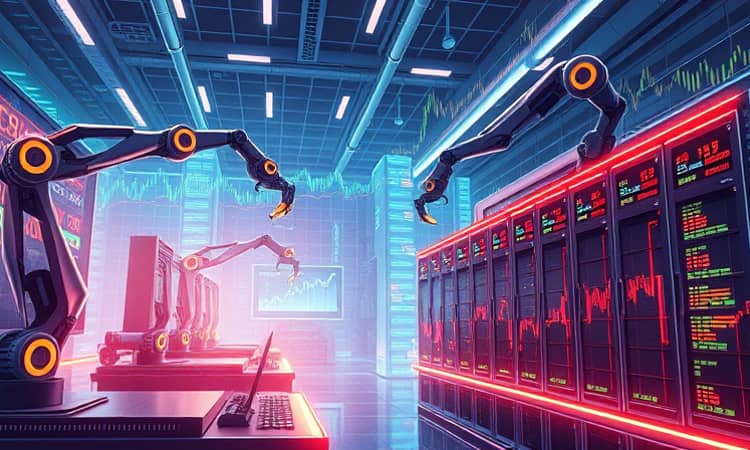
Building robust algorithmic systems demands a sophisticated technology stack. Compute power, connectivity, and real-time analytics converge in a high-stakes environment where milliseconds equate to millions.
Cloud deployments already account for over half of global algorithmic trading spending, offering elastic resources for parallel backtests and direct connectivity to exchanges like Nasdaq and CME. On-premises solutions still excel in ultra-low latency environments, often based in dedicated data centers.
Equally important are robust data feeds and APIs that deliver market data, order book snapshots, and trade confirmations with minimal delay. Combined with high-performance hardware—FPGA cards, multi-core CPU clusters, and even GPU arrays—these elements ensure strategies execute exactly when programmed conditions occur.
Balancing Speed with Safeguards
While speed and precision drive profits, they also introduce unique risks. Technical failures or errant code can trigger runaway losses within seconds. To mitigate exposure, institutions implement multi-layered safeguards and comprehensive monitoring systems.
- Automated kill switches halt trading when loss thresholds breach predefined limits.
- Real-time surveillance tools detect abnormal activity and enforce compliance with regulatory standards.
- Redundant systems and failover protocols ensure continuity during hardware or network outages.
- Regular code audits and rigorous backtesting under stress scenarios uncover potential pitfalls.
Regulatory bodies such as the SEC and FINRA enforce rules governing algorithmic strategies, requiring firms to maintain transparent audit trails and demonstrate robust risk controls. These frameworks promote market integrity while encouraging innovation.
Advantages and Practical Applications
Algorithmic trading offers distinct benefits that extend beyond raw speed:
- Elimination of emotional bias ensures consistent, rule-based execution across varying market conditions.
- Cost efficiency through reduced transaction fees and minimized market impact.
- Enhanced portfolio management by simultaneously monitoring multiple asset classes.
- Accessibility for smaller traders via cloud platforms and low-cost APIs.
From institutional investors optimizing large-order execution to retail enthusiasts experimenting with quant strategies, algorithmic tools democratize access to sophisticated trading techniques once reserved for major banks.
Looking Ahead: Innovation and Impact
The future of algorithmic trading hinges on deeper integration with next-generation technologies. Asia Pacific markets are poised for extraordinary growth, fueled by retail participation and government-backed fintech initiatives. Photonic connectivity trials in Japan hint at even lower latency options, while machine learning and deep learning algorithms evolve toward self-learning, adaptive systems.
Cloud-based infrastructures will continue to expand, offering unparalleled scalability for small funds and solo traders. Meanwhile, regulatory frameworks will adapt, balancing innovation against the need for market stability. As algorithms grow more autonomous, ethical considerations surrounding market manipulation and algorithmic accountability will demand fresh solutions.
For individual traders and institutions alike, the message is clear: embrace the algorithmic revolution. Cultivate coding skills, deepen your understanding of data science, and prioritize risk management. By doing so, you can unlock new dimensions of market opportunity and contribute to an ecosystem where human ingenuity and machine precision work in harmony.
In a world where speed, data, and automation define success, algorithmic trading stands at the frontier. It challenges us to think differently, to innovate relentlessly, and to build systems that elevate both technology and human potential.