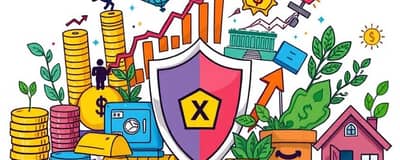
The convergence of crowdfunding and public markets is reshaping the investment landscape. From democratized capital raising to regulated trading opportunities, individuals and institutions alike are forging new pathways to fund innovation and growth.
Understanding the New Investment Frontier
The world of financing is experiencing a profound transformation. Where once traditional banks and initial public offerings dominated, now democratization to structured investment ecosystems is opening doors for diverse participants. Crowdfunding platforms have evolved from simple donation and reward models into sophisticated equity and debt marketplaces that mirror public exchanges.
This shift empowers entrepreneurs to engage directly with supporters, build communities around ideas, and validate concepts before full-scale launches. At the same time, investors gain access to early-stage opportunities previously reserved for venture capital or institutional funds. The result is a dynamic, inclusive environment that bridges grassroots innovation with the mechanisms of established markets.
Key Market Drivers and Innovations
Several powerful forces are fueling this momentum. Understanding these drivers can help creators and backers navigate the evolving ecosystem and maximize their impact.
- Digital and social media acceleration: Widespread connectivity and platforms like Instagram and LinkedIn enhance campaign visibility and engagement.
- Growing alternative financing demand: Startups and small businesses seek faster, more accessible capital than traditional banks can provide.
- Post-COVID momentum in giving: Community-driven funding for humanitarian and medical needs demonstrated crowdfunding’s social impact.
- Regulatory evolution and global harmonization: Policies like Reg CF and Reg A+ in the U.S. enable larger raises and offer investor protections.
- Institutional involvement enhances trust: Due diligence, verification, and secondary trading add layers of credibility for equity campaigns.
Segmentation and Leading Sectors
The crowdfunding market is diverse, spanning multiple funding models and industries. This segmentation reveals where opportunities and challenges lie.
End users also shape the landscape by their unique needs and methods of engagement.
- Startups dominate early-stage investment
- NGOs and non-profits drive donation campaigns
- Creative professionals leverage reward models
- Individual donors fuel personal causes
From Crowdfunding to Public Markets
As crowdfunding platforms mature, they increasingly adopt mechanisms traditionally found in public markets. Regulatory frameworks like Reg CF and Reg A+ have paved the way for raises exceeding $40 million, reflecting a shift toward equity crowdfunding as mini-IPOs. This evolution offers companies a staged approach: validate concepts, raise seed capital, and eventually list in public markets or enable secondary trading.
Investors benefit from improved liquidity options, transparent valuation methods, and enhanced due diligence processes. Campaigns featuring experienced founders and strong audiences now capture the majority of capital, signaling a consolidation trend akin to public equity markets. For entrepreneurs, this means a clearer roadmap from crowdfunding launch to potential public listing.
Challenges and Path Forward
Despite robust growth projections, hurdles remain. Approximately 60% of campaigns fail to meet their goals, and limited awareness in emerging regions can stall adoption. These high failure rates discourage participation among both new creators and backers.
Building trust through transparency, setting realistic targets, and leveraging data analytics can mitigate risks. Platforms that integrate AI-driven fraud detection and blockchain-based record-keeping are at the forefront of safeguarding stakeholder interests. Continuous education about regulatory requirements and best practices is vital to sustaining growth.
A Global Perspective: Regional Dynamics
Crowdfunding’s pace and scale vary by region. North America leads with a 39.6% share in 2025, supported by platforms like Kickstarter and GoFundMe. China follows closely with mature donation and reward markets, accounting for 37% of global activity.
Europe’s harmonized regulations foster cross-border equity crowdfunding, while Asia Pacific benefits from widespread internet penetration driving rapid adoption. Latin America, the Middle East, and Africa show steady gains via financial inclusion initiatives. Southeast Asia’s entrepreneurial boom promises significant future expansion as regulatory frameworks evolve.
Future Outlook and Closing Thoughts
Looking ahead, the crowdfunding ecosystem is poised to become an integral part of the broader investment journey. Innovations in blockchain tokenization will further enhance transparency, while AI and data analytics will optimize campaign success rates. Environmental and social impact projects are likely to gain traction as investors seek purpose alongside profit.
For creators, the keys to success include:
- Crafting compelling narratives that resonate with communities
- Engaging early supporters and maintaining open communication
- Leveraging analytics to refine strategies and set achievable goals
- Exploring hybrid models that combine crowdfunding with venture capital or strategic partnerships
Ultimately, the fusion of crowdfunding with public market principles offers a compelling vision: an ecosystem where innovation is funded transparently, investors access diverse opportunities, and communities co-create the future. Embracing this paradigm shift can unlock unprecedented growth for projects and reshape the way capital flows across the globe.