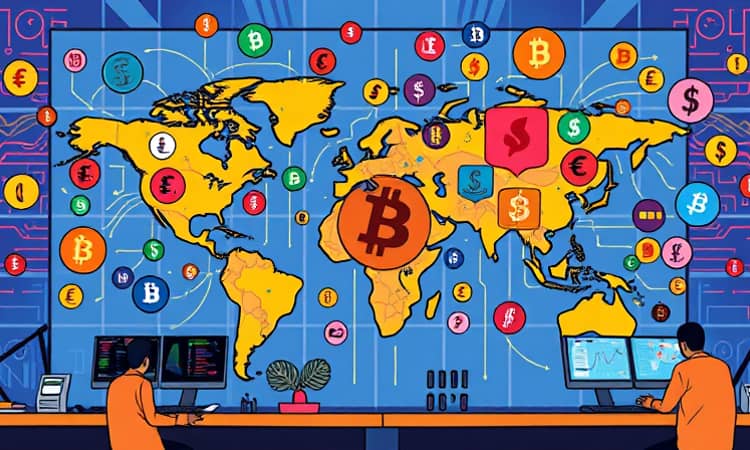
The global foreign exchange, or Forex, market stands as the largest and most liquid financial market in the world, operating continuously across major financial centers and spanning every time zone. Traders, institutions, and corporations move money in a seamless ecosystem that facilitates trade, investment, and risk management. With a dynamic global foreign exchange network connecting participants, this market not only reflects economic health but also drives innovation in trading technologies and strategies on an unprecedented scale.
Market Size and Growth Projections
Recent data underscores the staggering scale of currency markets. As of April 2025, average daily turnover surged to daily trading volume of $9.6 trillion, marking a 28% increase from 2022 figures. To put this into perspective, the Forex market eclipses global GDP by about seventeen times, demonstrating its extraordinary capacity to absorb capital flows and respond to macroeconomic shifts around the clock. Market participants benefit from deep liquidity and a diverse range of products designed to manage risk or pursue speculative gains.
Throughout the decade, long-term projections point toward sustained expansion. Analysts at major research firms project that the Forex broker market alone will grow from $5.2 trillion in 2023 to projected to reach $13 trillion by 2032 at an approximate 10.9% compound annual growth rate. Other forecasts from Mordor Intelligence and IMARC Group reinforce this outlook, suggesting robust growth driven by digitalization and an influx of retail and institutional traders seeking to leverage global currency movements. Such trends underscore the enduring appeal of this financial arena.
Trading Instruments and Market Composition
Forex trading encompasses a wide array of instruments, each catering to specific risk profiles and objectives. Spanning from simple spot transactions to complex derivatives, traders can choose the tools that best align with their strategies. In April 2025 turnover data, Forex swaps claimed the largest segment, accounting for over 41% of activity. Spot trades followed with nearly 31%, while outright forwards, options, and currency swaps comprised the remainder.
The following table offers a concise snapshot of market shares for key financial instruments, synthesizing data from various reports:
This broad instrument mix allows for tailored exposure to currency fluctuations. Hedgers, speculators, and arbitrageurs all find their niche in a landscape that rewards both analytical rigor and agile execution.
Key Participants and Geographic Distribution
At the heart of the Forex ecosystem lie institutions and individual traders alike. Commercial banks and central banks anchor liquidity provision, while hedge funds and proprietary trading desks drive innovation in algorithmic approaches. Retail platforms have democratized access, with leading brokers registering tens of millions of accounts worldwide. Notably, Robinhood reported over 26 million funded accounts by mid-2025, highlighting the surge in individual participation.
The distribution of active traders displays intriguing regional dynamics. Asia leads in participant numbers, fueled by emerging market interest and expanding digital platforms. Europe and North America maintain robust engagement, reflecting mature regulatory frameworks and diverse trading tools.
- UK: 341,000 active online traders
- US: 335,000 active online traders
- Japan: 223,000 active online traders
- Singapore: 218,000 active online traders
- Hong Kong: 200,000 active online traders
Such concentration underscores the importance of local market structures and time zone influences, with peak trading volumes often aligning with overlapping market hours. As the Asia-Pacific region accelerates its digital infrastructure, it is poised to become an even more dominant force in global currency flows.
Drivers, Trends, and Emerging Factors
The Forex market’s dynamism is fueled by a complex interplay of economic, technological, and geopolitical forces. Interest rate differentials continue to guide carry trades, while central bank interventions can trigger sharp volatility. Recent years have also witnessed a surge in retail participation, supported by improved platforms and mobile trading applications.
- Volatility from geopolitical events and policy shifts
- Algorithmic execution and automated trading strategies
- High-frequency trading optimizing microprice movements
- Integration of AI and machine learning for predictive analytics
Underlying these trends is the relentless march of technology. Traders increasingly rely on real-time data feeds, robust analytics, and cloud-based infrastructure to maintain a competitive edge. In this environment, the ability to process information rapidly and react to market events can be the difference between profit and loss.
Looking ahead, regulatory frameworks and digital finance innovations will shape the market’s trajectory. Central banks exploring digital currencies, combined with the expansion of decentralized finance, hint at transformative possibilities that may redefine traditional currency trading paradigms.
Future Outlook and Opportunities
Despite uncertainties such as potential global recessions or shifts in monetary policy, the long-term outlook remains optimistic. Emerging economies are expected to contribute significantly to future trading volumes, offering new corridors of capital flow and diversification opportunities. Enhanced data analytics is also projected to unlock over USD 118.14 billion in additional value for market participants.
For traders and institutions alike, nurturing robust risk management frameworks is critical. Advances in liquidity risk modeling and options pricing, alongside improved regulatory clarity, will foster a resilient marketplace. Moreover, the growing interest in ESG-aligned investment strategies may introduce thematic currency products, driving further product innovation.
Adapting to the pace of change requires continuous learning and strategic agility. By staying informed of macroeconomic indicators, leveraging technological advancements, and cultivating disciplined trading plans, participants can navigate volatility and harness the vast potential of the global Forex market.
Conclusion
The sprawling Forex landscape offers an unparalleled arena for those seeking to engage with global economic currents. From institutional giants deploying complex derivatives to individual traders harnessing mobile platforms, every participant contributes to a tapestry of liquidity and opportunity. By understanding market structures, embracing innovation, and anticipating future trends, market players can position themselves to thrive in rapid algorithmic trading and AI adoption scenarios and capitalize on dynamic Asia-Pacific emerging market growth acceleration. As the digital revolution continues to reshape finance, the Forex market remains at the forefront, embodying the ever-evolving spirit of global capital mobilization.