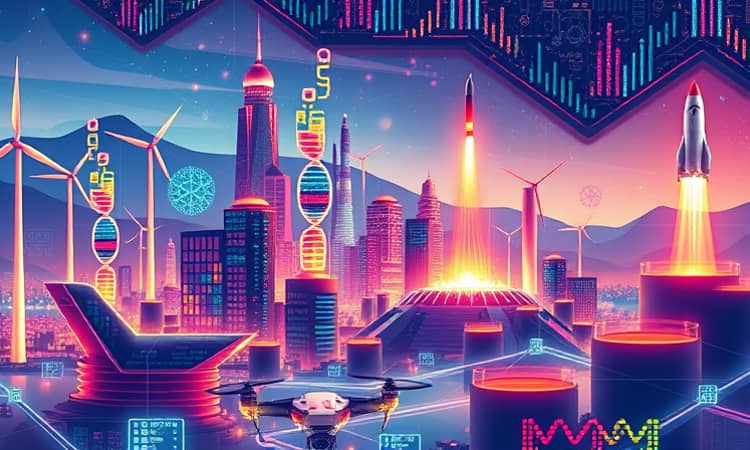
As we approach 2026, the global economy is poised for transformative growth driven by technology, sustainability, and innovation. Businesses, investors, and entrepreneurs must understand the evolving landscape to seize emerging opportunities.
Global Trends Driving Sectoral Growth
The next decade will witness unprecedented expansion across multiple domains. Analysts project that by 2030, artificial intelligence alone could contribute 15.7 trillion dollars to the global economy, while renewable energy investments will surge to over two trillion dollars annually.
Key macro drivers include:
- Integration of artificial intelligence across sectors for automation and predictive analytics.
- Sustainable solutions addressing climate change through clean energy and circular economy models.
- Digital transformation accelerating consumer experiences in finance, healthcare, and retail.
- Post-pandemic health innovations in telemedicine, mRNA vaccines, and wearable diagnostics.
These forces are reshaping industry boundaries, creating fertile ground for startups and incumbents alike.
Top High-Growth Industries to Watch
While many sectors are expanding, a few stand out for their exceptional compound annual growth rates (CAGRs), revenue gains, and broad influence across value chains.
Beyond these three pillars, several adjacent and emerging industries promise significant upside:
- Fintech and Digital Banking revolutionizing payments, lending, and decentralized finance.
- E-commerce and Logistics Innovations powering AI-enabled warehouses and last-mile delivery drones.
- Space Exploration and Advanced Manufacturing with reusable rockets and AI-driven production lines.
- Cryptocurrency and Blockchain platforms integrating with traditional financial systems.
- Consumer Electronics and Durables, including electric vehicles and smart home devices.
Regional Variations and Opportunities
Growth trajectories vary across geographies. In the United States, CleanTech, AI, HealthTech, and FinTech lead the charge, supported by robust venture capital and government incentives. Europe is accelerating offshore wind and hydrogen projects, while Asia-Pacific dominates semiconductor manufacturing and digital commerce.
Emerging markets such as India and Southeast Asia are leapfrogging legacy infrastructure, using mobile-first fintech solutions and renewable microgrids to serve unbanked and off-grid populations. Canada’s highest-growth niches include market research, advanced optics, and specialized manufacturing, reflecting local talent pools and export-driven strategies.
Spotlight on Industry Leaders
Several companies have cemented their positions at the forefront of these trends. Their strategies offer a blueprint for success.
- Artificial Intelligence: Microsoft Azure’s AI cloud services; Google DeepMind’s research breakthroughs.
- Renewables: Tesla Energy’s solar roofs and Powerwall batteries; NextEra Energy’s global wind farms.
- Healthcare & Biotech: Moderna’s mRNA vaccine platforms; Illumina’s genomics sequencing tools.
- Fintech: Stripe’s global payment infrastructure; emerging DeFi protocols enabling peer-to-peer lending.
- E-commerce & Logistics: Amazon’s autonomous warehouses; Shopify’s merchant ecosystems.
- Space & Manufacturing: SpaceX’s reusable rockets; Boeing’s advanced composite aircraft design.
Key Drivers Shaping the Future
Understanding the catalysts behind growth helps stakeholders make informed decisions. Several cross-cutting themes emerge:
- AI-driven optimization reducing costs by 20–30% across supply chains.
- Regulatory support and subsidies for low-carbon technologies globally.
- Consumer demand for personalized, on-demand experiences powered by data analytics.
- Collaborative ecosystems between corporates, startups, and research institutions.
Companies that embrace adaptability, invest in R&D, and foster agile cultures will capture the lion’s share of value in these dynamic markets.
Practical Steps for Investors and Entrepreneurs
To capitalize on these opportunities, consider the following approaches:
- Conduct rigorous market analysis to identify underserved niches and customer pain points.
- Form strategic partnerships with technology providers and academic centers to access cutting-edge research.
- Prioritize scalability and sustainability in product design and operational models.
- Leverage government incentives and grant programs aimed at green energy and advanced manufacturing.
- Maintain financial discipline by focusing on unit economics and controlled burn rates.
Conclusion: Seizing the Moment
The period from 2026 to 2030 promises to be an era of unparalleled innovation. Industries that marry technology with sustainability, health, and consumer convenience will define the next wave of economic growth. By staying informed, agile, and purpose-driven, investors and businesses can position themselves at the leading edge of tomorrow’s hottest sectors.
Now is the time to act. The roadmap is clear: embrace disruption, cultivate partnerships, and harness the power of data and clean technologies. In doing so, we shape not only profitable enterprises but a more resilient, equitable, and sustainable world.