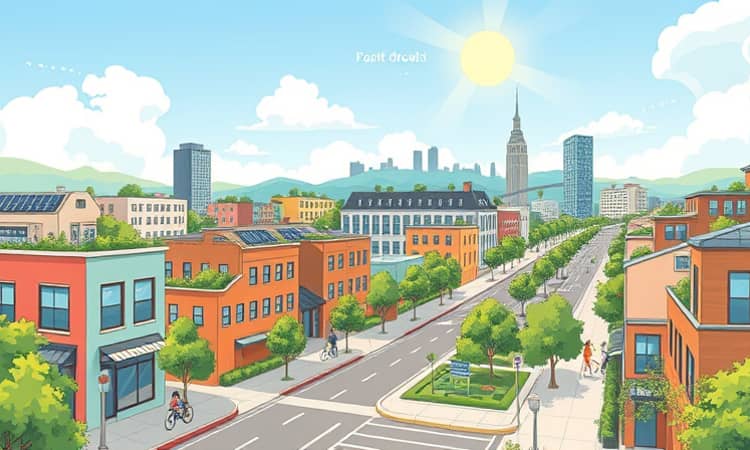
In an era defined by rapid urbanization and environmental challenges, smart growth strategies balance development and conservation to craft thriving communities. This article explores innovative methods and real-world examples that empower planners, developers, and residents to collaborate in building resilient urban and rural spaces.
Understanding Smart Growth
Smart growth evolved as a response to sprawling suburbs, congested highways, and fragmented landscapes. At its core, it is a philosophy that guides growth toward intentional, sustainable outcomes rather than unchecked expansion.
The Environmental Protection Agency defines smart growth as a range of development and conservation strategies that enhance public health, protect natural resources, and strengthen local economies. By focusing on compact, walkable urban centers and preserving open land, communities can achieve long-term vitality.
Internationally, similar concepts are known as “compact city” or “urban intensification” in the UK and Europe. Cities like Copenhagen and Freiburg exemplify holistic integration of transportation and green space, showing that smart growth transcends borders and scales.
Rather than debating growth versus no growth, smart growth reframes the conversation: it champions good, intentional expansion over unplanned development. This shift ensures that as populations rise, cities and towns remain inclusive, efficient, and environmentally sound.
Foundational Principles Driving Sustainable Growth
Ten guiding principles form the backbone of smart growth. They ensure each project respects social, economic, and ecological goals in equal measure:
- Mix land uses
- Take advantage of compact building design
- Create a range of housing opportunities and choices
- Create walkable neighborhoods
- Foster distinctive, attractive communities with a strong sense of place
- Preserve open space, farmland, natural beauty, and critical environmental areas
- Strengthen and direct development towards existing communities
- Provide a variety of transportation choices
- Make development decisions predictable, fair, and cost effective
- Encourage community and stakeholder collaboration in development decisions
These principles overlap and reinforce one another. For example, mixing land uses naturally supports walkability and reduces reliance on private vehicles, while preserving critical environmental areas safeguards biodiversity and flood protection.
Key Implementation Strategies
Bringing smart growth principles to life requires a blend of traditional wisdom and modern innovation. Below is a summary of the primary strategies driving sustainable asset expansion:
Energy-efficient building designs, such as passive solar orientation and high R-value insulation, can reduce heating and cooling loads by up to 50%. Combining these with on-site renewable energy technologies like rooftop solar arrays or micro wind turbines drives projects closer to net-zero targets. Local governments often provide rebates and streamlined permitting to encourage these installations, making the financial case even stronger.
Stormwater management is another critical piece. Techniques like bioswales, permeable pavements, and green roofs not only mitigate flood risks but also revitalize urban biodiversity and water quality. By capturing and filtering runoff on-site, developments reduce strain on municipal systems and create green amenities that residents enjoy year-round.
Smart building systems leverage the Internet of Things and AI-driven analytics to continuously optimize energy, water, and waste processes. For example, automated lighting adjustments based on natural daylight and occupancy patterns can cut electricity consumption by 30% or more. When integrated into district-level management platforms, these technologies enable responsive, data-driven urban operations on an unprecedented scale.
Each strategy can be tailored to local contexts. For example, Transit-Oriented Developments (TODs) in cities like Portland, Oregon, showcase how concentrating growth around rail and bus hubs fosters community-driven, sustainable transit solutions. Meanwhile, rural revitalization projects leverage Prioritized Development Areas (PDAs) to reinforce infrastructure investment where it already exists, thereby avoiding greenfield land consumption and honoring historical landscapes and cultural heritage.
Environmental, Economic, and Social Benefits
When implemented holistically, smart growth delivers a trifecta of benefits:
- Reduce pollution and conserve ecosystems
- Boost economic competitiveness and job creation
- Promote social equity and healthier lifestyles
From an environmental standpoint, smart growth excels at minimizing air and water pollution through reduced commuting distances and protected green corridors. Brownfields redevelopment cleans contaminated properties, transforming liabilities into new community assets.
Economically, well-designed mixed-use districts attract businesses and startups, creating sustainable local job markets and diversified tax bases. Developers who integrate on-site renewable energy often see higher leasing rates and faster returns on investment, proving that green buildings are also sound financial choices.
Socially, walkable neighborhoods foster casual interactions, enhance safety through natural surveillance, and reduce feelings of isolation. A variety of housing types—from affordable apartments to loft conversions—ensures that people of all income levels can access quality homes near schools and workplaces.
Best Practices and Future Outlook
Achieving smart growth at scale demands collaboration among public agencies, private developers, and community stakeholders. By aligning regulations, incentives, and vision, cities can create a powerful framework for sustainable development.
- Establish clear urban-growth boundaries and zoning reforms
- Offer tax incentives and grants for green building certifications
- Engage residents through workshops, charrettes, and surveys
- Leverage public-private partnerships to fund infrastructure upgrades
- Develop integrated data platforms for transparent decision-making
- Prioritize equitable access to transportation, parks, and services
- Promote adaptive reuse of historic structures and underutilized sites
Policy frameworks aligning local zoning codes with the United Nations Sustainable Development Goals (SDGs) can accelerate adoption of best practices. For example, mandating green building standards and requiring affordable housing quotas ensure that growth remains balanced and equitable. Transparent reporting on energy use, water savings, and social impact fosters trust and drives continuous improvement.
Looking ahead, emerging technologies like modular construction, advanced energy storage, and digital twins will further refine how we plan, build, and manage assets. The concept of a circular economy—where materials remain in use and waste is minimized—will reshape supply chains and construction practices alike.
By embracing smart growth, communities can craft creative, durable solutions for tomorrow's challenges. Whether in a dense metropolis or a small town, the marriage of strategy, innovation, and participation will nurture places where both people and nature prosper.
As we stand at the crossroads of climate change, economic shifts, and evolving demographics, the principles of smart growth offer a compass. They remind us that growth need not compromise heritage or habitat, but can, instead, spark regeneration, resilience, and renewed hope.