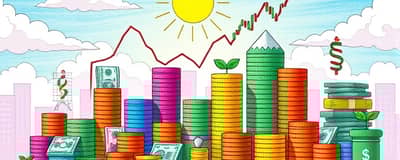
In a world where financial markets dominate conversation, one truth remains constant: knowledge outperforms market returns. This article explores why formal education and financial literacy are the most powerful investments you can make.
Drawing on decades of research, we reveal how college degrees and hands-on financial education deliver returns that rival or exceed traditional assets. We also offer strategies to maximize your human capital and prepare for the evolving economic landscape.
Education as an Investment: Quantified Returns
Pursuing a college degree is often framed as a personal milestone rather than an investment decision. Yet when we analyze lifetime earnings, the numbers speak for themselves. Across demographics, a bachelor’s degree yields an average annualized return of 9–10%, surpassing the stock market’s historical real return of about 7%.
Adjusted for inflation, these educational returns climb even higher—between 12% and 14% annually. For women, median earnings growth translates to 9.88% yearly returns; for men, 9.06%. Underlying these figures is a substantial lifetime earnings premium that ranges from $200,000 to $300,000 above high school graduates.
At scale, U.S. college attendees generate an extra $73.4 billion in annual earnings compared to their peers with only a high school diploma. Remarkably, low-income families account for $17.9 billion of this gain, highlighting the role of education in promoting social mobility.
Beyond Numbers: Holistic Benefits of Education
While financial returns are compelling, the true power of education extends far beyond dollars and cents. Graduates report:
- Improved health and well-being: lower chronic disease rates and longer lifespans.
- Enhanced critical thinking skills: empowering better career and life decisions.
- Stronger civic engagement: higher voting rates and community involvement.
- Reduced unemployment risk: resilience during economic downturns.
These non-economic outcomes often double the effective return on investment when monetized, reinforcing the notion that education builds lasting human capital.
Yet not all fields yield identical economic gains. The table below illustrates how major choice influences returns:
Financial Literacy: Multiplying Your Knowledge
Just as college builds human capital, financial literacy acts as an education multiplier. Investors who understand core principles achieve superior long-term outcomes. A landmark study found that the most literate 401(k) participants earn 130 basis points more in risk-adjusted annual returns than the least literate—a remarkable edge in retirement planning.
Financially savvy individuals also experience:
- Greater participation in equity markets and reduced drawdowns.
- Better portfolio diversification and faster adaptation to market shifts.
- Enhanced ability to counteract behavioral biases such as loss aversion.
- Higher overall satisfaction and confidence in financial decisions.
By mastering inflation, compound interest, and risk-return trade-offs, literate investors unlock consistent, positive performance that rivals any single asset class.
Strategies for Maximizing Knowledge Investments
To harness the full potential of education and literacy, consider these practical steps:
- Select high-return majors: STEM and health disciplines often yield superior financial returns.
- Supplement low-ROI fields: acquire certifications or technical skills to boost earnings potential.
- Commit to lifelong learning: attend workshops, online courses, and professional development programs.
- Build a financial plan: automate contributions to retirement accounts and emergency funds.
- Diversify knowledge sources: combine academic credentials with real-world internships and mentorships.
Each strategy mirrors core investing principles: assess risk, optimize allocation, and continuously rebalance your human capital portfolio.
The Future of Knowledge Investing
As tuition costs rise and technology reshapes industries, the landscape of knowledge investing continues to evolve. Majors in data science, artificial intelligence, and bioengineering are poised for explosive returns, while traditional fields may require supplemental certificates to remain competitive.
Community benefits will also grow: higher aggregate earnings fund public services, innovate healthcare, and strengthen civic infrastructure. Financial literacy campaigns promise to narrow wealth gaps, empowering retail investors to rival institutional players.
Embracing education as an investment challenges us to think beyond immediate costs. It invites us to build portfolios of skills, relationships, and experiences that appreciate over a lifetime. By valuing knowledge above all, we position ourselves to thrive in an ever-changing economy.
Ultimately, the most resilient investors are those who recognize that the greatest assets are not stocks or bonds, but the lessons we learn and the wisdom we share.