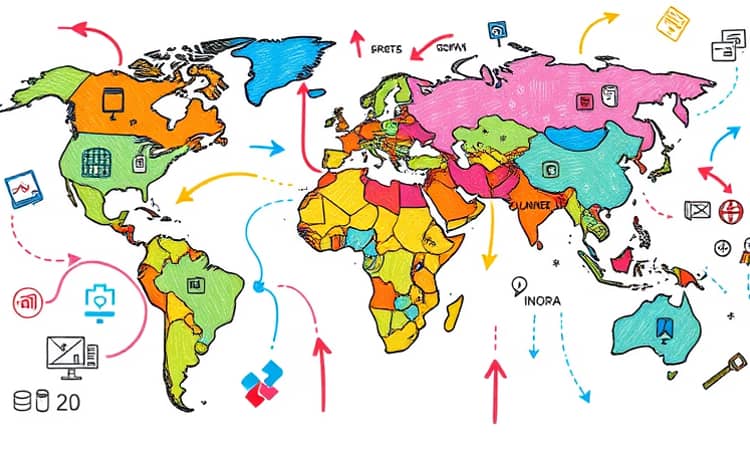
In an interconnected world, investors are seeking pathways beyond domestic markets to capture growth, manage risk, and harness innovation. This comprehensive guide explores strategies and insights for broadening horizons and building resilient, diversified portfolios.
Broadening Global Opportunities
With shifting economic dynamics in 2026, targeting new regions and sectors can offer powerful returns and risk mitigation. By allocating assets across diverse markets, you can tap into unique growth drivers and cushion against localized downturns.
Key cross-border hotspots include:
- Emerging markets debt and equity: Strong policy support and AI adoption fuel EM outperformance, led by India’s 6.7% GDP growth forecast.
- European equities: Valuations remain attractive as fiscal spending for defense and digital infrastructure bolsters growth.
- Japanese equities: Corporate reforms and fiscal expansion are driving renewed investor interest.
- US small-caps: Beyond the large caps, small companies benefit from broadening participation beyond US equities trends.
- APAC semiconductors: Infrastructure and data-center build-outs underpin durable demand.
Anticipating the AI and Technology Super-Cycle
The AI revolution is entering a multi-year AI infrastructure super-cycle as companies invest in data centers, power, and specialized equipment. While hyperscalers lead the charge, second-order beneficiaries emerge in manufacturing, logistics, and energy management.
In emerging markets, semiconductor fabs and consumer tech firms are capitalizing on global supply-chain shifts. In developed regions, non-tech sectors such as utilities and industrials are integrating automation to drive productivity gains and sustainability goals.
Navigating Geopolitical and Trade Risks
Elevated geopolitical tensions and evolving trade policies have created a multipolar world of competing priorities. Tariffs, export controls, and strategic realignments are reshaping global supply chains and investment flows.
Europe and Japan are responding with fiscal spending for growth and self-sufficiency, funding defense, renewable energy, and digital infrastructure. In parallel, China’s focus on critical industries and domestic consumption presents both opportunities and regulatory headwinds for cross-border investors.
Data-Driven Forecasts at a Glance
Anchoring investment decisions in robust economic projections can improve timing and allocation. The table below summarizes key forecasts and drivers for 2026:
Sector and Asset Class Highlights
Diversification extends beyond geography. Key themes and sectors poised for growth include:
- Equities: Quality growth stocks, international value, and Japan/EM exposure.
- Fixed Income: Income strategies benefit from rate-adjustment cycles and modest inflation.
- Infrastructure & Private Markets: AI-driven infrastructure and energy expansion underpin long-term returns.
- Materials & Energy: Metals and commodities support AI investments and decarbonization.
- Active vs. Passive: Rising active ETF flows signal demand for targeted, nimble exposure.
Embracing Risk Management and Future Drivers
While opportunities abound, prudent investors must monitor potential pitfalls. Consider the following risk factors:
- Elevated geopolitical tensions and trade barriers that may disrupt supply chains.
- Slower-than-expected AI capital expenditures and technology adoption lags.
- Domestic political volatility in key emerging markets.
- Uneven regional growth and narrow leadership in equity markets.
- Societal shifts in aging demographics impacting labor markets and consumption patterns.
Effective risk management combines strategic asset allocation with dynamic adjustments. Regularly reassess positions against evolving economic indicators and policy developments.
Conclusion
Investing across borders in 2026 requires a blend of bold vision and disciplined analysis. By expanding into emerging markets, harnessing the AI super-cycle, and navigating geopolitical challenges, investors can build resilient, diversified portfolios for the long term. Anchored in data-driven forecasts and thematic insights, your cross-border strategy can capture growth, manage risk, and contribute to a more connected global economy.