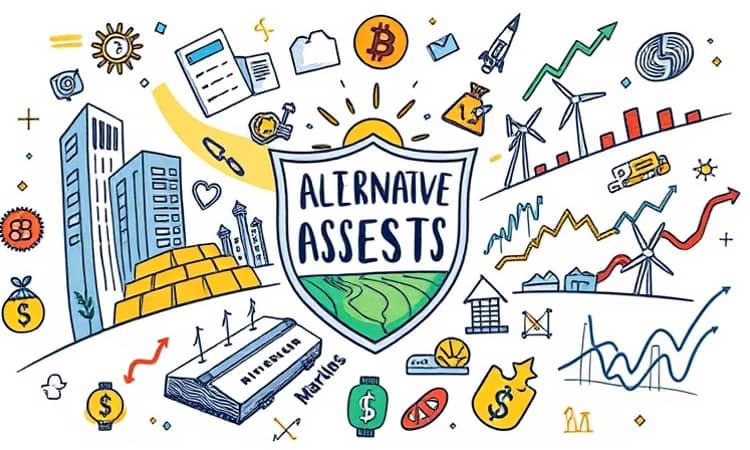
In an era defined by rapid technological change and shifting economic landscapes, traditional stocks and bonds may not suffice to achieve enduring growth and stability. Savvy investors are increasingly turning to alternative assets to expand their horizons.
These unconventional instruments span private markets, real estate, commodities, and digital currencies, offering a rich tapestry of opportunities for those ready to explore beyond the mainstream.
This guide is designed to inspire and equip you with the knowledge to navigate these dynamic asset classes, helping you build a resilient and forward-looking portfolio.
Understanding Alternative Assets
Alternative investments are non-traditional vehicles outside the realm of public equities, fixed income, and cash. They range from private equity buyouts and hedge fund strategies to real assets like timberland and precious metals.
Characterized by low correlation to public markets, lighter regulation, and often illiquidity that demands conviction, these assets can act as powerful complements to mainstream holdings.
Historically, access was limited to institutions and ultra-high-net-worth individuals. Today, platforms, REITs, and liquid alternatives have democratized entry, opening doors for retail investors to participate in previously unattainable opportunities.
Unlocking the Benefits
Integrating alternatives into your portfolio can yield transformative results. Their diverse drivers often shine when traditional markets falter, providing corridors for growth that move counter to public sentiment.
- diversification for risk mitigation across economic cycles and market shocks.
- potential hedges against inflation through tangible and real asset holdings.
- higher returns in private markets driven by active management and strategic value creation.
- low correlation to public markets that can smooth overall portfolio volatility.
Income-focused alternatives, such as private credit and real estate, deliver steady cash flows through interest payments and rent, anchoring your portfolio during downturns.
Meanwhile, specialty sectors like commodities and infrastructure can capture gains tied to global trends, from renewable energy to supply chain dynamics.
Navigating Risks and Trade-offs
Despite their appeal, alternative investments come with inherent challenges. Illiquidity is the most prominent: many vehicles lock up capital for years to pursue long-term gains.
longer holding periods require patience and a robust investment thesis to weather market fluctuations along the way.
Fees can also be substantial, covering both management and performance-based structures, which may impact net returns compared to simpler index funds.
Complexity is another factor. Proprietary hedge fund strategies, structured credit, and emerging digital assets require rigorous research, due diligence, and technical know-how.
Thankfully, modern research tools, transparent reporting platforms, and specialized advisors can help demystify these layers, empowering investors to make informed choices.
Exploring Major Alternative Asset Classes
Below is a snapshot of key alternative asset classes, highlighting their unique characteristics and common return mechanisms.
Understanding each class’s dynamics allows you to tailor allocations based on your goals, liquidity requirements, and risk appetite.
Strategies for Building Your Portfolio
Constructing a balanced allocation into alternatives starts with clarity on your investment horizon, goals, and comfort with complexity. Begin by setting an allocation target—commonly 5% to 20% of total assets—to alternatives, adjusting for personal circumstances.
Newcomers may prefer liquid vehicles like publicly traded REITs or interval funds before diversifying into deeper private markets. Seasoned investors often layer in private equity funds, direct lending, and niche real assets over time.
due diligence and risk management are essential. Evaluate management teams, track records, fee structures, and lockup terms. Incorporate scenario analysis to assess how each asset might behave under stress.
Tax considerations also play a vital role—certain structures offer deferred gains, but may have complex reporting requirements. Engaging with a knowledgeable advisor or tax professional can help optimize outcomes while ensuring compliance.
Finally, schedule periodic reviews—ideally quarterly or semi-annually—to rebalance and reassess emerging opportunities, keeping your strategy agile and aligned with evolving market dynamics.
Looking Ahead: Trends in Alternative Investing
The landscape continues to innovate. Crowdfunding platforms, tokenization of assets, and digital marketplaces are lowering barriers to entry and reducing minimum investment thresholds.
Impact-oriented investing is also gaining traction, forging connections between financial returns and social or environmental objectives. From green infrastructure funds to sustainable agriculture projects, these opportunities resonate with investors seeking both profit and purpose.
long-term strategic value creation in areas like renewable energy, affordable housing, and social infrastructure is driving capital toward sectors that can generate meaningful change while delivering competitive returns.
Leveraging big data, AI-driven analytics, and blockchain transparency will only deepen our understanding of risk and reward, ushering in a new era of informed alternative investing.
Embracing the Journey Beyond Equities
Venturing beyond the equity markets is more than a tactical move—it is a mindset shift toward embracing complexity, diversity, and innovation. This journey invites you to think expansively about wealth creation and preservation.
By weaving alternative assets into your portfolio, you build a tapestry of uncorrelated streams, each with the potential to shine when others dim. This mosaic approach can transform volatility into an advantage, harnessing different market rhythms to your benefit.
strategic allocation across asset classes empowers you to navigate uncertainty with conviction, anchored by a broad foundation of income, growth, and value drivers.
Now is the time to step beyond the familiar confines of equities and explore the vast universe of alternative investments. Seize this opportunity to fortify your financial future, crafting a portfolio that stands resilient against the tests of tomorrow.