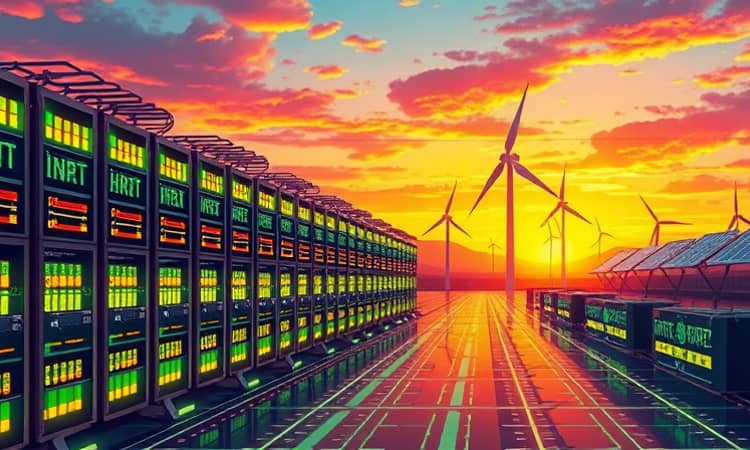
In an era defined by digital transformation, cryptocurrency mining stands at the intersection of cutting-edge technology, economic ambition, and environmental responsibility. As governments, investors, and innovators race to harness the power of decentralized finance, understanding the inner workings of mining is no longer optional—it's essential. This article explores the journey from raw computational power to verified transactions, highlighting practical insights and inspiring solutions for a more sustainable future.
Whether you are a seasoned miner, a curious investor, or an advocate for greener technology, the following deep dive will equip you with the knowledge to navigate this complex landscape and make informed decisions.
How Cryptocurrency Mining Works
At its core, cryptocurrency mining relies on Proof-of-Work (PoW) protocols designed to secure the network by verifying transactions and preventing fraud. Miners compete to solve a cryptographic puzzle—essentially a race to find a special number, or nonce, that when hashed with transaction data, meets a strict target value. The first to succeed adds a new block to the blockchain, earning freshly minted coins and transaction fees.
These puzzles adjust in difficulty to maintain consistent block times (approximately 10 minutes for Bitcoin). Over time, networks require more processing power and sophisticated hardware, turning mining into a global arms race.
- Validate transactions without central authorities
- Prevent double-spending in a trustless environment
- Issue new coins through algorithmic rewards
Imagine miners as digital treasure hunters, each testing billions of combinations per second. The thrill of discovery is tempered by fierce competition and high energy demands, underscoring the
immense energy requirements behind each block.
Specialized Hardware and Requirements
Success in mining hinges on hardware optimized for hashing power. General-purpose computers quickly fall behind as the network difficulty soars.
Beyond the physical machines, miners need robust software, a secure crypto wallet, reliable internet connectivity, and often, membership in a mining pool to smooth out reward variability. Large operations invest heavily in rapid technological obsolescence strategies, planning hardware refresh cycles to maintain competitive edge.
Cooling infrastructure—ranging from air conditioning to liquid immersion—is equally critical. Without adequate heat dissipation, performance suffers and equipment lifespan shortens.
Economics and Incentives
Mining is fundamentally driven by economic incentives. Block rewards and transaction fees compensate for capital expenditures and operational costs, creating a self-sustaining model for network security.
- Electricity costs per kilowatt-hour
- Upfront and maintenance costs of hardware
- Mining difficulty and hash rate competition
- Cryptocurrency market price fluctuations
- Cooling and facility overhead
Miners must constantly evaluate the return on investment as block rewards halve at predictable intervals, reducing new supply. Joining a pool can stabilize earnings, sharing rewards among participants, but dilutes individual payouts. Smart operators monitor global electricity markets and adjust operations to operate when energy is cheapest.
Environmental Impacts
The growth of PoW mining has sparked intense debate over its environmental footprint. Bitcoin alone consumes approximately 0.5% of global electricity, translating into millions of tonnes of CO2 emissions annually. Fossil fuel–powered grids amplify the problem, with coal-heavy regions like parts of China—before its mining ban—and Kazakhstan ranking among the highest emitters.
Local air quality suffers as nearby power plants ramp up generation to meet mining demand, exposing communities to elevated PM2.5 pollution. Meanwhile, discarded ASIC units contribute to e-waste, challenging recycling infrastructures.
- Transition to renewable energy sources
- Adoption of more efficient cooling methods
- Carbon offset initiatives such as reforestation
While some mining farms embrace renewable energy sources like hydroelectric, solar, and wind, the rapid relocation of operations during market fluctuations can stress grids and lead to unintended environmental trade-offs.
Global Landscape and Trends
Mining geography has shifted dramatically. Once dominated by China, the industry scattered into the United States, Kazakhstan, Russia, Canada, and beyond. The U.S. now hosts dozens of large-scale mines powered by hundreds of power plants, stressing regional grids but also stimulating investment in energy infrastructure.
Emerging clusters near hydroelectric dams in Scandinavia and wind-rich sites in Texas demonstrate the potential for sustainable mining. These innovators align production with clean energy availability, reducing carbon intensity and inspiring new industry standards.
Key statistics reveal that ten countries account for over 90% of Bitcoin’s carbon, water, and land footprints. As miners chase cheap power, they inadvertently shape local economies, labor markets, and environmental policies.
Challenges and Innovations for the Future
The path ahead demands a balance between security, profitability, and environmental stewardship. Rising difficulty and hardware scarcity challenge scalability, while the absence of unified regulatory frameworks hampers consistent environmental accountability.
Fortunately, advancements offer hope. Ethereum’s shift to Proof-of-Stake slashed its energy use by over 99%, setting a precedent for alternative consensus models. Immersion cooling, AI-driven hash optimization, and modular, energy-efficient hardware design promise incremental gains for PoW networks.
- Embrace energy-efficient consensus models
- Encourage decentralized renewable deployments
- Implement transparent environmental reporting
Stakeholders must collaborate on policy incentives, emissions taxes, and infrastructure funding to guide mining toward a carbon-neutral future. Continuous research, updated data, and cross-border cooperation will be pivotal in harmonizing the digital gold rush with the planet’s well-being.
As you consider entering the mining space or expanding operations, weigh both the economic potential and the ecological responsibilities. By championing innovation and sustainability, we can ensure cryptocurrency mining remains a force for growth and positive change.
Cryptocurrency mining is more than a technical pursuit—it’s a test of our collective commitment to harness digital progress without sacrificing environmental integrity. The choices we make today will shape the financial and ecological legacy of tomorrow.