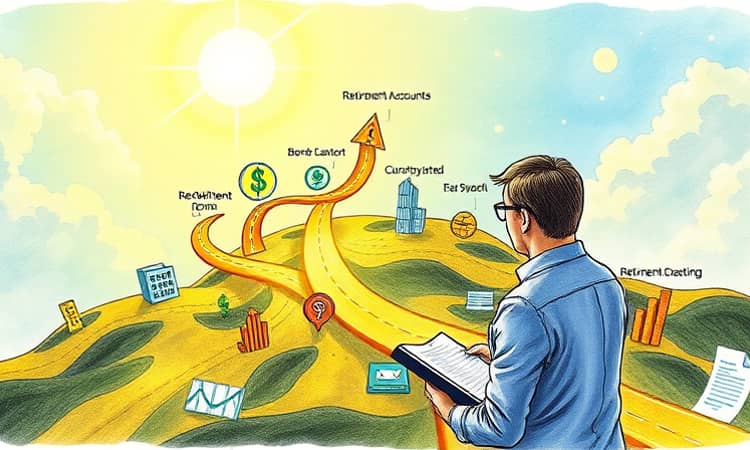
Tax-efficient investing is the art of structuring your portfolio so that less of your hard-earned returns go to taxes and more stays working for you. In 2026, with a $16,100 standard deduction for singles and new income thresholds for long-term gains, the opportunity to strategic account selection and asset placement has never been more vital.
By weaving together contributions to varied account types, precise placement of assets, and harvesting techniques, investors can maximize after-tax returns over decades and build lasting wealth. This guide explores eight core strategies, updated for 2026’s tax brackets, SALT caps, and Opportunity Zone deadlines.
Maximize Tax-Advantaged Accounts
Retirement and education accounts remain the foundation of any tax-efficient plan. Higher 2026 contribution limits for 401(k)s, IRAs, HSAs, FSAs, 529 plans, and Roth vehicles allow you to defer or eliminate taxes on growth.
- Contribute up to employer match in a 401(k) or 403(b), then fund a traditional IRA or Roth IRA when eligible.
- Use HSAs as a tax-free growth and withdrawal vehicle for medical expenses.
- Consider Roth conversions in years of lower taxable income to lock in future tax-free withdrawals.
- Leverage Net Unrealized Appreciation (NUA) for employer stock in ESOPs, paying ordinary tax on basis and long-term capital gains on appreciation.
Tax-Efficient Asset Location
Where you hold an investment can matter as much as what you hold. Placing certain assets in the right wrapper minimizes yearly tax drag.
- Hold tax-inefficient assets like REITs and corporate bonds in tax-deferred accounts where interest and distributions compound without annual tax.
- Keep low-turnover index funds, individual stocks, and municipal bonds in taxable accounts to benefit from long-term capital gains rates and tax exemption.
- Use municipal bonds in a high-income portfolio for tax-exempt interest in taxable accounts.
Tax-Loss Harvesting
Systematically selling underperforming positions to realize losses can offset realized gains and up to $3,000 of ordinary income each year. Excess losses carry forward indefinitely.
Implement loss harvesting year-round, especially during market volatility, and consider tax-managed index funds that replicate benchmarks while generating regular, modest tax losses.
Tax-Gain Harvesting
In years when your taxable income falls into the 0% long-term capital gains bracket—below $49,450 for singles or $98,900 for joint filers—you can sell appreciated holdings tax-free. This strategy locks in cost basis resets and reduces concentration risk.
Passive and Tax-Efficient Vehicles
ETFs and index funds typically generate fewer taxable distributions than actively managed mutual funds. Favor low-turnover equity ETFs in taxable accounts and use active strategies in tax-deferred vehicles to minimize annual gains distributions.
Charitable and Deduction Strategies
Bundling contributions in donor-advised funds allows you to exceed the standard deduction and create a multi-year giving budget. Qualified Charitable Distributions (QCDs) from IRAs let retirees satisfy Required Minimum Distributions tax-free.
Donating appreciated securities instead of cash sidesteps capital gains taxes and provides a full fair-market deduction.
Opportunity Zones and Real Estate Techniques
Investing capital gains into Qualified Opportunity Funds (QOFs) defers the tax on those gains until Dec. 31, 2026 or disposition. After a five-year holding period, you receive a 10% basis step-up; rural QOFs offer 30% if you meet a 50% improvement threshold. Hold 10 years for permanent exclusion of post-investment gains.
Real estate investors can also use 1031 exchanges, bonus depreciation under Section 168(k), cost segregation, and Section 179D energy deductions to accelerate deductions and improve cash flow.
Other 2026 Tax Planning Tactics
Coordinate state and local tax (SALT) deductions—capped at $40,400 for some high-tax filers—with careful itemizing. Use the “lesser-of” safe harbor for estimated payments to deploy excess cash into short-term, tax-efficient investments.
Monitor legislative changes in rates and deferral opportunities, and consider deferring income into years with anticipated lower brackets.
Illustrative Scenarios
By applying these preserve wealth amid potential rate hikes and following a disciplined plan, investors can offset capital gains and ordinary income more effectively. Collaborate with fiduciary advisors to model scenarios, adhere to wash-sale rules, and stay abreast of changing thresholds.
Tax-efficient investing is more than saving pennies on your tax return. It’s about defer gains by reinvesting in QOFs, optimizing account placement, and leveraging every deduction to ensure your portfolio works as hard as you do. Embrace these strategies in 2026 to keep more of your gains and secure your financial future.