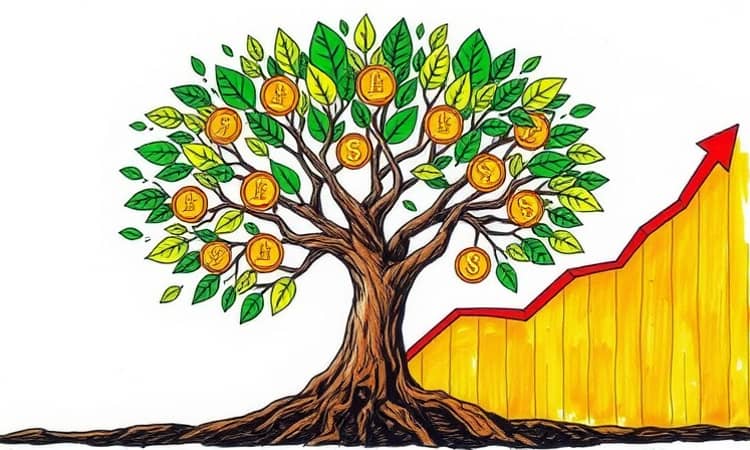
In today’s complex financial world, investors are seeking ways to merge ethical values with robust returns. The idea of socially responsible asset growth strategies goes beyond tradition, challenging the notion that profit and principle must diverge. By embracing strategies rooted in environmental stewardship, social responsibility and rigorous governance, it is possible to align profit with purpose and fuel transformative change.
With U.S. sustainable investing assets under management soaring to approximately $6.6 trillion, and the global green economy representing 8.6 percent of listed equity markets with a market capitalisation of $7.9 trillion as of Q1 2025, the momentum is undeniable. Investors now have the opportunity to participate in what can only be described as a new frontier of finance.
Understanding the Sustainable Finance Landscape
Before crafting a strategy, it is essential to understand the market’s fundamental drivers. From the rise of green bonds to growing consumer demand for transparency, sustainability has become a core criterion in capital allocation decisions. Regulatory shifts and technological innovation have further propelled this movement, creating a fertile environment for asset growth strategies that are both profitable and principled.
- $6.6 trillion in U.S. assets under management
- 8.6% of global equity markets represented by the green economy
- $572 billion green bond issuance in 2024
- 20% projected annual growth rate (2026–2030)
Green bond issuance has been a cornerstone of this growth, with annual volumes reaching a record high. These instruments enable investors to directly fund projects that combat climate change, from renewable energy plants to sustainable transport networks. By directing capital through purpose-driven green debt instruments, market participants can achieve measurable environmental impact alongside consistent and steady income streams.
Institutional Commitment and Demand
Institutional investors are at the forefront of the shift toward sustainability. Surveys indicate that 86 percent of asset owners plan to increase their allocations to sustainability strategies in the next two years, while 73 percent have already reported growth in sustainability-aligned assets. Fixed income leadership is also emerging, accounting for 63 percent of responsible investment assets under management in Europe.
Regional dynamics reveal further commitment, with Southeast and South Asia reporting 80 percent growth in sustainable allocations, and the U.K. close behind at 78 percent. This widespread adoption demonstrates not only market resilience, but also a collective recognition that integrating long-term environmental and social metrics can bolster financial performance.
Emerging Investment Opportunities
The landscape is rich with opportunities in key thematic areas. Energy efficiency and renewable energy top institutional priority lists, followed by climate adaptation. Natural capital strategies—spanning biodiversity, forestry and sustainable agriculture—are gaining traction. Private markets too have seen significant inflows, driven by renewable energy projects and data centre developments aligned with decarbonisation goals.
Alongside energy themes, natural capital strategies are surging in importance. Investors are recognizing the urgent need to protect biodiversity and ecosystem services. While only eight percent of companies currently have biodiversity commitments, the potential for impact and returns is vast. Funding gaps nearing one trillion dollars annually highlight both challenges and opportunities in this critical investment frontier.
Performance Evidence and Financial Returns
Substantial data underscores the financial benefits of sustainable strategies. Climate engagement initiatives have yielded 4 percent higher cumulative returns within one year, increasing to 12 percent after two years. Companies with active governance engagement have seen 7 percent higher returns after one year and nearly 12 percent after two and a half years.
- 4% higher returns after one year of climate engagement
- 12% higher returns after two years
- 11.8% return improvement through governance engagement
- 9% average excess returns over five years in board composition efforts
Navigating Market Challenges and Resilience Indicators
Despite policy headwinds and regulatory divergence across regions, sustainable investing remains resilient. Adoption rates have held steady at around 73 percent among asset owners, and inflows continue across asset classes. Investors are recalibrating focus toward physical climate risk mitigation and adaptation finance, which governments have committed to triple by 2035—a clear indicator of future funding priorities.
Crafting a Strategy for the Ethical Edge
Translating ambition into action requires a structured approach. First, conduct a comprehensive assessment of existing portfolios to identify sustainability gaps. Next, establish measurable targets for carbon reduction, social inclusion and governance standards. Third, engage actively with portfolio companies to foster transparency and accountability. Finally, integrate technology and data analytics to monitor progress and adapt strategies in real time.
- Assess portfolio for environmental and social risks
- Set measurable targets for sustainability
- Engage with companies to drive accountability
- Leverage AI-driven insights for monitoring
- Rebalance allocations toward high-impact themes
Looking Ahead: The Future of Sustainable Investing
The coming years will be defined by a deepening integration of ESG metrics into mainstream finance. Advances in corporate reporting, powered by International Sustainability Standards, will enhance data transparency. AI will continue to refine analysis, balancing labour concerns with analytical efficiency. Natural capital investment is poised to triple by 2030, unlocking nearly $10 trillion of potential value from biodiversity and ecosystem services.
Investors who embrace this evolution will secure the ethical edge, positioning their portfolios for long-term resilience and growth. By moving beyond announcements to demonstrable outcomes, they can meet stakeholder demands, manage risks more effectively, and contribute to a healthier planet.
As sustainable assets grow, collaboration among asset owners, regulators and corporations will be crucial. The shift toward values-based capital allocation is not a trend; it is a paradigm shift defining the next generation of wealth creation. Seize the opportunity today to lead with integrity, innovation and impact.