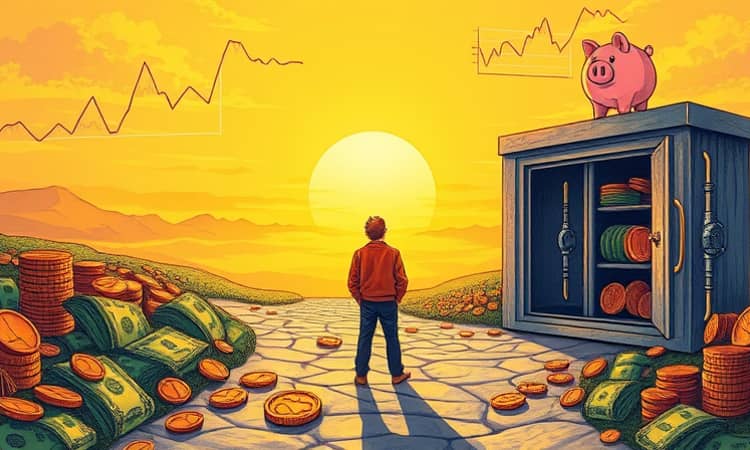
Today’s consumers face a complex financial landscape where optimism about spending coexists with concerns over long-term security. Striking a balance between enjoying the present and safeguarding the future is essential for lasting prosperity.
Recent data reveal a remarkable 2.6% year-over-year card spending growth in January 2026, the strongest pace since February 2024. Yet, behind this resilience lies a stark reality: 58% of Americans have the same or less emergency savings than a year ago.
Resilience in Spending: Embracing the Present
After years of belt-tightening, consumer attitudes are shifting. Only 39% of individuals plan to reduce spending in 2026, down from 69% in the previous year. This change signals a collective desire to reclaim life's small joys without abandoning prudence.
Many are adopting mindful spending to combat rising costs, choosing quality experiences over impulse buys. Others embrace a more moderate stance, with 43% expressing a balanced expense mindset for daily life.
- 49% plan "mindful spending" strategies.
- 43% adopt a balanced approach.
- 63% expect 2026 to be financially better than 2025.
Optimism coexists with caution. While 51% anticipate higher prices, half of those surveyed remain hopeful about their personal finances. This dual outlook fuels spending resilience in the face of economic headwinds.
Building Strong Savings: Securing the Future
On the savings front, households are in a healthier position than many realize. Median checking and savings balances, adjusted for inflation, exceed 2019 levels across most income and generational cohorts.
Steady 401(k) growth has also bolstered retirement readiness. Average balances have remained stable over the past two quarters and have risen significantly compared to pre-pandemic figures.
With federal tax refunds projected to be higher in 2026, many households will find fresh deposits into their savings. Seeking out high-yield accounts for short-term goals has become a popular tactic, with some offerings delivering more than eight times the typical bank rate.
Emergency Funds and Debt Dynamics
Despite elevated overall balances, emergency funds tell a more concerning story. A significant portion of Americans lacks sufficient liquid reserves to weather unexpected expenses.
Beyond raw numbers, nearly one-third of consumers hold more credit card debt than emergency savings. In the past year, 37% tapped their reserves, primarily for essentials like medical bills and car repairs, though younger generations were more likely to use funds for non-essentials.
Generational Perspectives: Diverse Financial Realities
Financial well-being varies widely by age. Gen Z and Millennials face higher anxiety about future finances, with 64% of Millennials reporting significant stress related to money. Meanwhile, Boomers and Gen Xers, though less anxious on average, still grapple with emergency fund gaps.
Debt-to-savings ratios also shift across cohorts: 19% of Gen Z have more debt than savings, compared to 35% of Millennials and 33% of Gen X. A noteworthy 27% of Boomers fall into the same category, underscoring that no generation is immune to shortfalls.
- 34% of Gen Z have no emergency savings.
- 28% of Millennials lack reserves.
- 24% of Gen X and Boomers have zero buffer.
Comfort levels correlate strongly with savings: 80% of those with at least three months’ expenses feel secure, while 76% with less than three months feel uneasy.
Strategies for Sustainable Financial Health
Balancing present enjoyment with future security requires deliberate action. Financial resolutions are back in vogue, with 84% of Americans setting goals for 2026. Top priorities include building emergency funds, paying down debt, and maximizing high-yield options.
To translate resolutions into reality, consider these approaches:
- Automate transfers to a designated emergency account.
- Revisit subscriptions and trim non-essential expenses.
- Leverage tax refunds to bolster savings.
- Allocate a fixed percentage of income to retirement plans.
Regular reviews—quarterly or semiannually—help maintain momentum. Pairing an upbeat attitude with rigorous tracking can foster balancing today’s pleasures with tomorrow’s security in meaningful ways.
Ultimately, financial health is a dynamic journey rather than a fixed destination. By embracing optimistic spending and disciplined saving, households can enjoy life’s rewards without compromising long-term goals.
This balanced path not only strengthens personal resilience but also cultivates lasting peace of mind—proof that with thoughtful planning, you can savor today and thrive tomorrow.