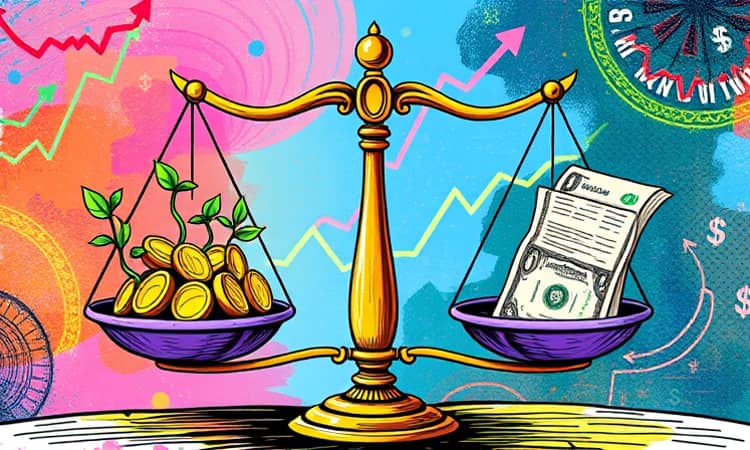
Every financial decision you make is influenced by interest rates, whether you realize it or not. These percentages are the invisible forces that determine how much you ultimately pay on a loan, and how much you earn by setting money aside. By mastering the language of interest, you open doors to smarter choices and greater financial stability. In this guide, you will learn the essential definitions, explore the variety of rate structures, and discover practical strategies to borrow wisely and save effectively.
Even if the topic feels daunting, breaking it down into clear steps can empower you to take control. From understanding the difference between the actual interest amount and the interest rate, to selecting the best savings vehicle, every insight you gain can lead to tangible improvements in your financial life. Let’s embark on a journey through the world of interest rates.
Core Concepts: The Foundation of Interest
At their simplest, interest rates represent the cost of borrowing money and the exceptional reward for saving. Imagine you deposit funds in a bank: you are effectively lending the institution your capital, and in return you earn a percentage. Conversely, when you take a loan, the bank becomes the lender and you pay an extra charge on top of the principal.
A critical distinction exists between the actual dollar amount exchanged and the percentage used to calculate it. Understanding this difference helps demystify monthly statements and projection tables. You can predict exactly how much you will pay or earn by applying the correct rate to the principal over the appropriate time period.
Simple interest is calculated solely on the principal. For example, borrowing $1,000 at 5% interest for three years yields $150 in total interest, resulting in a repayment of $1,150. The formula—Principal × Rate × Time—illustrates its straightforward nature.
Compound interest goes further by adding previous interest to the principal before calculating new interest. This process accelerates growth over time in savings, and it can also increase the cost of debt if left unchecked. Whether compounded daily, monthly or annually, the frequency influences the eventual total payback or yield.
Types of Interest Rates and Their Implications
- Fixed Rates: These remain constant throughout the term of a loan or deposit, offering certainty and stable payments regardless of market fluctuations.
- Variable Rates: Tied to a benchmark like the prime rate or LIBOR, they can start lower but may rise or fall, introducing risk and opportunity.
- Precomputed and Accrued Interest: Precomputed interest is allocated at the outset, often making early payments heavily interest-weighted. Accrued interest builds over time and is added when you pay off accounts.
This table highlights the most common metrics you will encounter on financial statements. By focusing not only on the raw rate but also on any additional fees or compounding frequency, you can make an informed and confident choice.
Borrowing Smart: Navigating Loan Costs
Taking on debt does not have to be a leap into the unknown. A well-chosen loan can finance a home, a vehicle or an education while keeping payments affordable. The key is understanding how interest influences your monthly obligations and overall cost.
Consider a $10,000 loan at 10% annual interest, compounded monthly, over five years. You would ultimately pay roughly $2,748 in interest. Breaking this down month by month reveals that early payments are dominated by interest, gradually shifting toward principal reduction as you progress. Being aware of this schedule can help you plan extra payments strategically.
- Creditworthiness: A strong credit score and steady income open doors to the lowest rates.
- Loan Term and Type: Longer durations often carry higher rates; secured loans typically cost less than unsecured.
- Lender Policies: Promotional offers, membership discounts or loyalty programs can trim your costs.
- Economic Factors: Market conditions, inflation expectations and central bank policy affect all rates.
By assessing these factors, you can approach lenders with greater confidence and negotiate more effectively. Remember: rates may be negotiable based on your profile and the competitive landscape.
Saving Wisely: Maximizing Your Returns
On the flip side of borrowing, saving your hard-earned money in higher-yield accounts strengthens your financial foundation. While the difference between a 0.5% and a 2.5% APY may seem slight, over years and compounded regularly, those percentages create significant wealth accumulation.
Banks and credit unions leverage depositor funds to make loans, sharing a portion of the income with savers. When central rates rise, they often pass on improved yields to attract more deposits. Even small adjustments can add hundreds or thousands of dollars to your balance over time.
For maximum impact, align your horizon with the product: short-term needs suit liquid savings accounts, while longer goals may benefit from certificates of deposit or money market accounts that lock in more attractive rates.
Strategies to Optimize Your Rates
- Shop rates and compare APR across multiple lenders to find the most competitive offers.
- Understand compounding and term effects before committing to any account or loan structure.
- Consider a fixed-rate agreement if you value stability in a rising-rate environment.
- Regularly review your accounts and refinance or switch institutions when better deals arise.
Small actions, executed consistently, can yield powerful results. Checking rates every six months and recalibrating your portfolio as conditions evolve keeps you ahead of the curve.
The Bigger Picture: Economic Forces at Play
The influence of a central bank’s benchmark rate cannot be overstated. When policy makers raise the base rate, commercial banks follow suit by increasing loan rates and, ideally, improving savings yields. Conversely, rate cuts aim to stimulate borrowing and spending during economic slowdowns.
This domino effect touches every aspect of personal finance. Homeowners with adjustable-rate mortgages, investors in bonds and consumers using credit cards all feel the ripple. Staying attuned to macroeconomic reports empowers you to anticipate shifts and adapt your strategy proactively.
Practical Steps for Financial Growth
Armed with knowledge and a clear plan, you can transform abstract percentages into real progress. Start by mapping your goals: are you aiming for debt freedom, a down payment on a house or a robust retirement fund? Each objective demands a tailored approach.
Use budgeting tools or simple spreadsheets to simulate different interest scenarios. Determine the impact of paying extra on high-rate debt versus parking that money in a savings account with growing APY. This analytical process reveals where your efforts deliver the greatest net gain.
Maintain an emergency cushion to avoid high-interest credit in unexpected situations. Reinvest interest earned on savings to harness the full power of compounding. Above all, review and adjust regularly to ensure your strategy aligns with changing personal and economic landscapes.
By understanding, comparing and optimizing interest rates, you gain control over two sides of your financial life: borrowing and saving. This balanced mastery propels you toward wealth accumulation and peace of mind, letting you focus on life’s aspirations rather than financial stress.